Jorge Araújo – Team Work Consultores
When investigating human behavior, it is essential to address the relational phenomenon of INFLUENCE. Whether at a scientific, neuroscientific, or philosophical level, in everything that concerns human beings and their relationships with each other, it has been proven that we not only INFLUENCE but are also INFLUENCED.
All of this is very clear today! Human behavior is both a relationship and an experience. A relationship with everything that surrounds us (people, things, different situations, diverse contexts, etc.).
An experience because it requires a certain practice (HABIT), which is important to acquire:
– because it almost always concerns a specific social rule.
– because it promotes team performance.
In either case, acquiring these HABITS requires deep reflection on the usual approach to these issues.
It is not about learning (acquiring knowledge) how to do something, but rather about TRAINING and ACQUIRING THE HABIT. We therefore need to experience the situations in question, “live and feel” such experiences in different situations, settings, or contexts.
Ultimately, we need to practice the real situation for which we want to prepare ourselves. Only then will we be able to acquire the necessary HABITS.
But be careful! Behavior sometimes “happens” to us automatically and unconsciously. What are the “first impression phenomenon,” sudden expressions of dislike or liking, and flight reactions to danger? They “HAPPEN” to us most of the time without conscious control!
A certain person or a surprising situation, or one that threatens our survival, “triggers” feelings or emotions that initially “happen” to us unconsciously. But that’s not all!
What is someone usually referred to as “toxic”? A person who, wherever they go, sometimes without even speaking, almost instantly “creates” what is commonly referred to as a “bad atmosphere.”
What is a so-called “positive” person? Someone who, wherever they go, creates a “good atmosphere” (positive environment), demonstrating empathetic behavior towards those around them or in the teams they are part of. What mutual influence!
In addition, our behavior is also influenced by previous pleasant or unpleasant experiences we have had in our relationships with each other.
When we express opinions, we almost always do so based on our previous experiences. On habits, values, and beliefs we have acquired. Just as when we are part of a team, we need to know how to accept, listen to, and understand those who, like us, belong to that team.
What exactly is a team?
A group of people who interact with each other in pursuit of common goals. But in teams, each member has their own opinions. They defend these as much as possible and fight for their respective comfort zones.
Others will defend common goals, sacrificing their individual well-being if necessary in the service of the collective. Like many others, they will persist in wanting to impose their particular interests.
However, a collective is only effective in its performance in relation to the objectives it pursues when each of its members interacts with the others in the service of common goals. This implies the prior acquisition of habits such as caring more about others than about oneself, or cooperating and working as a team. Therefore, only by accepting and encouraging mutual influence can one truly work as a team!
In conclusion, we are influenced and we influence, as we have already said here. When we express certain behaviors, we are always influenced (by our previous experiences) and we influence (by the relationship we establish with the situation in question).
In summary, simultaneously:
– we were influenced by the sensory and motor experiences we had had up to that point;
-we influence the environmental context in which our behavior is required at any given moment.
This means that, continuously and simultaneously, our behavior is always related to a specific (momentary) environmental situation and is always influenced by our experience, or lack thereof, of that same situation.
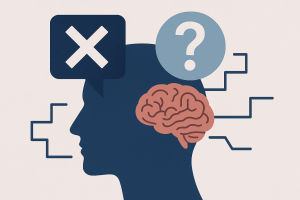
The same thing happens when we seek to empower the “Self in service to the Whole.” When we observe something and immediately form an opinion, we do so based on the values, beliefs, and social rules we have acquired up to that point. In other words, the opinion we then form about what we have seen and experienced simply represents “our truth.”
Obviously, “our truth” may or may not coincide with “the truth” of those with whom we live. That is why it is a real “waste” to want to be “right” immediately and try to impose what we consider to be “our truth” on everyone around us.
It is essential to listen to others, understand who interprets the surrounding reality in a way that is consistent with our own, establish common goals where possible, cooperate whenever possible, work as a team, and share knowledge. Ultimately (and once again!), influence and allow yourself to be influenced!
The same goes for Creative Ability!
To be creative, we must first have “learned to do by doing.”
Experimenting, observing, and learning from others, making mistakes, and learning from them.
The creative ability that some people display is based mainly on one reason.
A “bodily knowledge” acquired from an early age through the teaching and training that some have provided us with. Or rather, influenced us with!
One more thing!
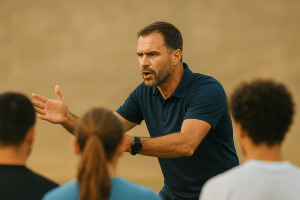
In every team I coached, there was always an anonymous and unconscious behavioral pattern among the players that not only began in an intersubjective way, but also influenced their interpersonal relationships. This made it important for me to investigate that, underlying their behaviors, there were always anonymous, intersubjective, intercorporeal, and relational influences and relationships.
I then experienced what it was like to “be part of a team” and, within my capabilities, contribute to making each of these teams as intelligent as possible. In other words, to ensure that, as a whole, they were a “Smart Team.” Later, I came to realize and learn that, in the end, “Smart Teams” only emerged when I, as a coach, assumed that the entire player/coach relationship was subject to continuous mutual influence!
Still training and education.
Throughout my 28 years as a behavioral coach, there has been much speculation about why our methodological approach is based on training (behavioral activities) rather than education (knowledge-based approach). In other words, why do we prefer what we call “learning by doing” (training) over the simple cognitive acquisition of knowledge (education)? And why do we insist so much on continuous improvement, even persisting with the idea that “those who don’t improve, get worse”?
It is not just that behavioral learning should be practical and experiential in nature! But, above all, that all these activities should also be associated with teamwork. Where, naturally, the entire evolutionary process depends on continuous mutual influence.